What to Expect When Comparing Virginia Beach, VA vs Chesapeake for Your Next Home
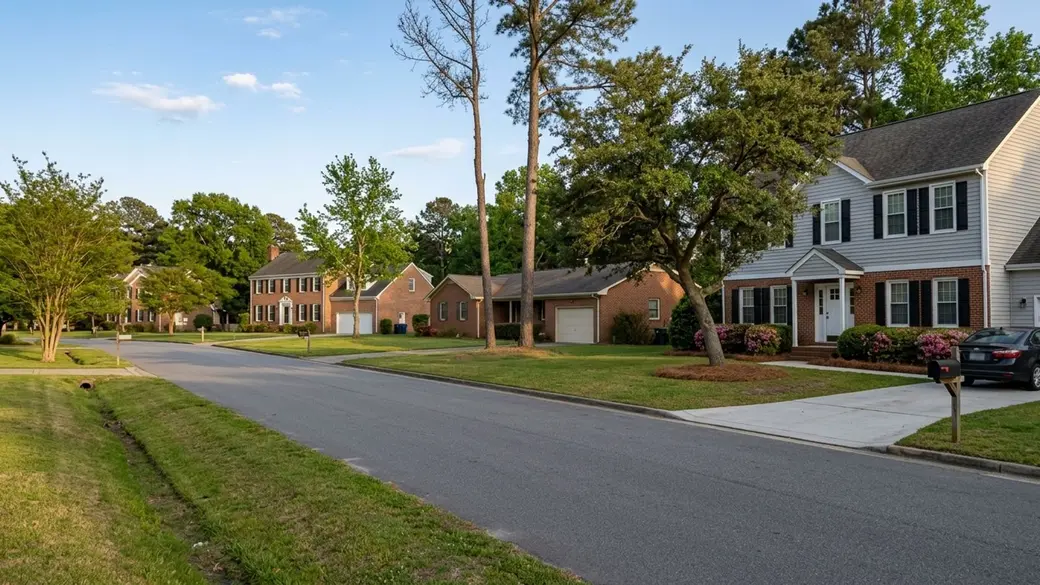
If you're shopping for a home on the Southside, you've probably already figured out that Virginia Beach and Chesapeake keep coming up together. They share a border, share access to the same military bases and major employers, and - at first glance - share a price range that's close enough to make the comparison feel almost arbitrary. It isn't, though, especially once you weigh the pros and cons of living in Virginia Beach. The two cities feel genuinely different on the ground, and the right choice depends a lot more on what kind of property and lifestyle you're after than on which city is technically cheaper.
Virginia Beach is a coastal city in the real sense - ocean, bay, established neighborhoods, and a resort strip that's central to the city's identity. Chesapeake is suburban and, in its southern reaches, outright rural, with lot sizes that would be impossible to find at the same price point in Virginia Beach. Most buyers who end up in one city rather than the other made that call based on those differences, not on price.
Housing Markets in Virginia Beach and Chesapeake
The median sale price in Virginia Beach is currently around $431,000, based on recent market data. Chesapeake sits almost exactly alongside it at about $435,000. For most buyers, that gap is noise.
Because the baseline costs are this close, you're choosing based on what the money gets you - the type of home, the lot, the neighborhood feel - not on which city is more affordable. That's where the two markets start to diverge.
Property Types and Lot Sizes
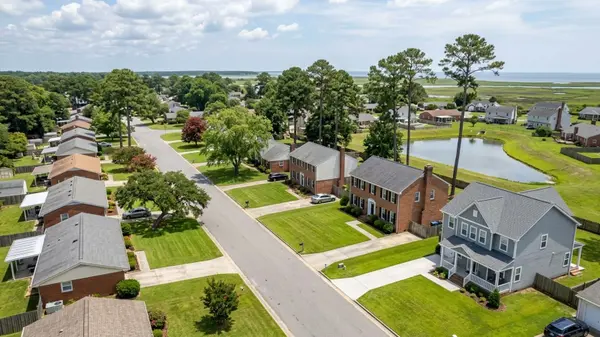
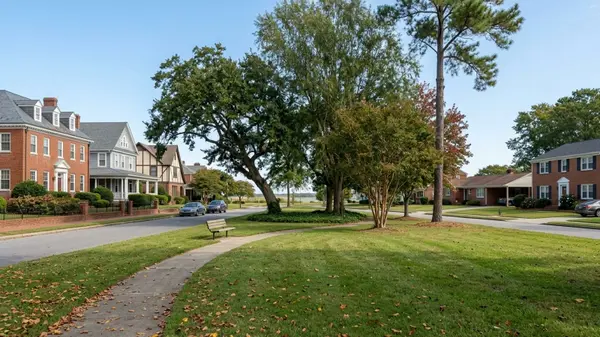
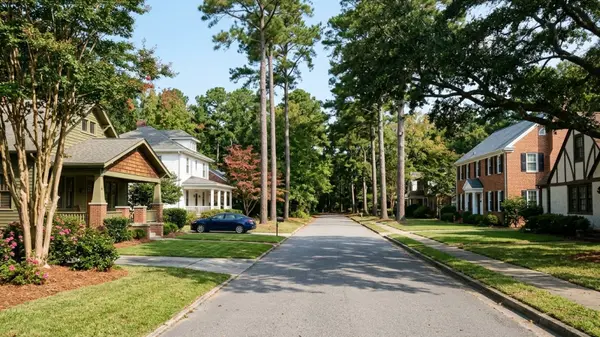
Virginia Beach listings skew toward two-story homes in what's categorized as a "Traditional" architectural style. The average living area runs about 1,976 square feet on a lot of roughly 5,721 square feet. Older neighborhoods like Alanton bring more variety - Colonial Revival, ranch, Dutch colonial - on mature, tree-lined lots.
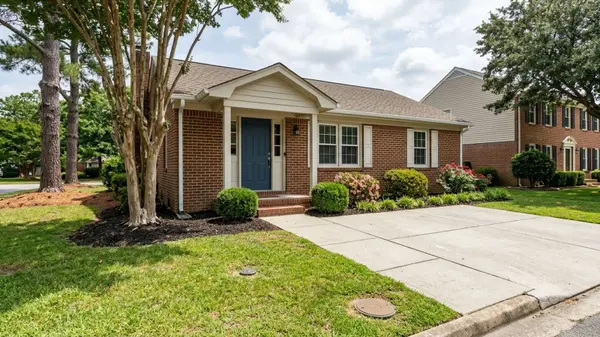
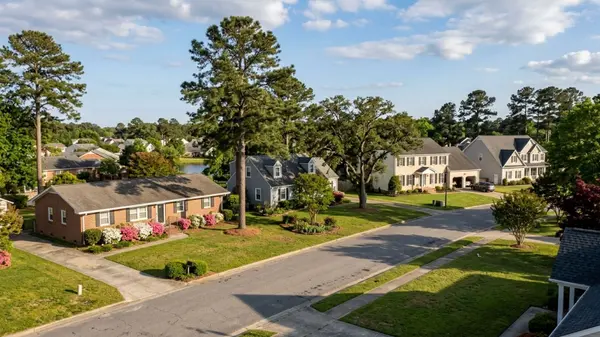
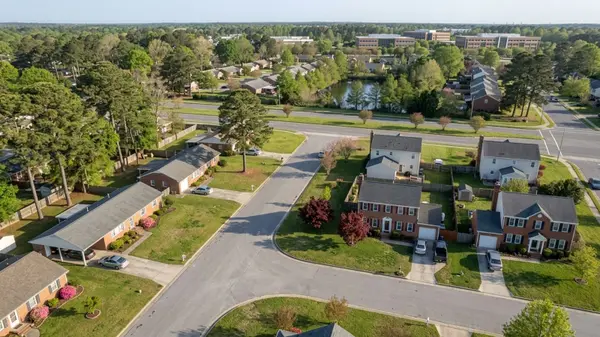
Chesapeake is single-family detached territory. Over 67% of the city's housing units fall into that category, and the median lot size reflects it: roughly 0.28 to 0.31 acres. You'll find contemporary brick homes in Western Branch, split-levels in Culpepper Landing, and large-lot luxury properties in areas like Hickory and Great Bridge. If a bigger yard is the goal, Chesapeake is where you look.
Market Speed and Competitiveness
Virginia Beach homes are spending a median of 25 days on the market before going under contract, with about 1,180 active listings and roughly 1.9 months of supply. That's a tight market. Well-priced homes move fast, and you'll need to be ready.
Chesapeake runs a little slower - averaging somewhere between 26 and 32 days on market. Bidding wars still happen for well-priced homes in both cities, but that extra window in Chesapeake can occasionally give you a weekend to think rather than forcing a same-day decision.
Managing Cost of Living and Taxes
With median values this close, your baseline mortgage payment is going to look nearly identical whether you're in Virginia Beach or Chesapeake. The ongoing costs that create separation between the two are property taxes and utilities, and those vary by neighborhood and home size - not just by city line.
Check the current municipal tax rates directly through both cities before you're under contract on anything. That rate feeds directly into your monthly escrow, and it's worth knowing the number before you fall in love with a specific house.
Commute Routes and Regional Accessibility
The Southside runs on I-64, I-264, and I-464. Chesapeake commuters also rely on the Chesapeake Expressway (Route 168) to route around local traffic. Those are the main arteries, and they work - until they don't.
The I-64 and I-264 interchange and the High Rise Bridge are the consistent pinch points. Map your actual commute route during rush hour before you commit to a neighborhood. A house that looks conveniently located on a map can turn into a 45-minute grind once you account for those bottlenecks.
Reaching Major Employers and Bases
Both cities give you reasonable access to the region's major military installations - NAS Oceana, Joint Expeditionary Base Little Creek-Fort Story, and Norfolk Naval Station all draw residents from Virginia Beach and Chesapeake alike.
Virginia Beach addresses tend to offer a more direct path to NAS Oceana and Little Creek. If Norfolk Naval Station is your daily destination, Chesapeake keeps you closer to the I-464 connection to I-64. For buyers making that drive five days a week, proximity to the right on-ramp matters more than people expect.
Local Lifestyle, Parks, and Shopping
The geography of these two cities shapes daily life in ways that go beyond commute times. Virginia Beach is built around coastal access - miles of Atlantic Ocean shoreline and Chesapeake Bay frontage. That's not something you supplement with an occasional weekend trip; it's part of the everyday texture of living there.
Chesapeake trades that for something different: inland waterways, forests, and in the southern reaches, genuine rural acreage. Neither is better - they're just different, and buyers tend to know pretty quickly which version appeals to them.
Parks and Outdoor Recreation
Virginia Beach residents have First Landing State Park for hiking and beach access, the Sandbridge area for a quieter coastal experience away from the resort strip, and the boardwalk as the central hub for oceanfront events and recreation.
In Chesapeake, the outdoor experience is wooded and inland. The Dismal Swamp Canal Trail draws runners and cyclists, and Oak Grove Lake Park offers a circular trail with water views. If you'd rather be in a forest than on a beach, Chesapeake delivers that without much debate.
Shopping and Dining Hubs
Virginia Beach has Town Center - a walkable district with dining and entertainment that functions as close to a downtown as the city gets - along with the Lynnhaven area for more traditional retail.
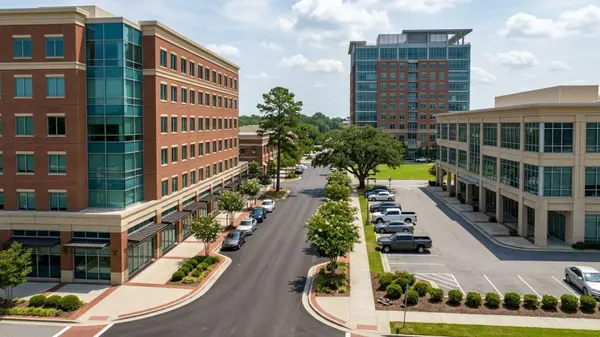
Chesapeake's commercial core is the Greenbrier and Edinburgh corridor. Greenbrier is dense with stores, restaurants, and office parks. Edinburgh serves the southern, more rural parts of the city, with retail development that's still expanding. Both cities have what you need; the question is which version of it suits how you want to live.
Researching Schools and Neighborhood Safety
Two things buyers almost always ask about - schools and safety - are also two things where I'd push you toward official sources rather than any summary I could offer here.
For schools, the Virginia Department of Education (VDOE) publishes School Quality Profiles for both the Virginia Beach and Chesapeake school districts. Those profiles include standardized testing results, graduation rates, and detailed district metrics. That's the right place to look.
For safety, the Virginia Beach Police Department and the Chesapeake Police Department both offer localized crime mapping tools and public records. Pull the data for the specific neighborhoods you're considering - city-wide averages tell you almost nothing useful about a particular street.
Common Questions About Virginia Beach and Chesapeake
Is it more expensive to live in Virginia Beach or Chesapeake?
The cost of living is genuinely comparable between the two cities. Median home prices sit around $431,000 in Virginia Beach and $435,000 in Chesapeake, making baseline housing costs nearly identical.
What are the property tax differences between Virginia Beach and Chesapeake?
Property tax rates are set by each municipality and can change annually. Check the current rates directly through the Virginia Beach and Chesapeake city websites to calculate exact escrow costs for a specific home.
How do commute times compare between Virginia Beach and Chesapeake?
Drive times depend entirely on your starting neighborhood and destination. Virginia Beach generally offers quicker access to NAS Oceana, while Chesapeake commuters often rely on I-464 and the Chesapeake Expressway to reach regional hubs.
Are homes in Virginia Beach, VA more likely to require flood insurance than properties in Chesapeake?
Coastal proximity generally increases the likelihood of flood zones in Virginia Beach, but Chesapeake also has extensive inland waterways. Check the FEMA flood map for any specific address in either city before making an offer.
Do homebuyers typically find larger lot sizes and newer construction in Chesapeake or Virginia Beach?
Chesapeake typically offers larger properties, with a median lot size of 0.28 to 0.31 acres compared to Virginia Beach's smaller average lots. Chesapeake also features many newer suburban developments and large-lot luxury homes in areas like Hickory and Great Bridge.
How should I research and compare neighborhood safety and school districts between Virginia Beach and Chesapeake?
Use official public resources. Review the VDOE School Quality Profiles for academic data, and check the Virginia Beach and Chesapeake Police Department websites for localized safety reports.
Categories
Recent Posts